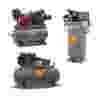
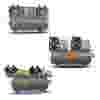
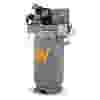
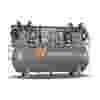
A reciprocating air compressor, also known as a piston compressor, uses a piston in a cylinder to compress air. When the piston moves down, air enters the cylinder. When the piston moves up, the space in the cylinder gets smaller and increases the pressure by compressing the air.
The system stores compressed air in a tank for later use in applications such as powering pneumatic tools, machinery, and processes. This cycle ensures that you always have enough compressed air for work. The cycle repeats as needed, ensuring a continuous supply of compressed air for industrial operations. Engineers design industrial reciprocating air compressors to handle high-pressure and high-flow operations, making them suitable for demanding industries.
Where are Reciprocating Compressors Commonly Used?
Industrial facilities, automotive repair shops, manufacturing plants, and remote job sites widely use reciprocating compressors. They’re perfect for powering air tools, spray painting, tire inflation, and heavy-duty machinery. DV Systems designs compressors that thrive in Canadian conditions—rugged, dependable, and built for tough jobs.
What is the Difference Between Single-Stage vs. Two-Stage Compressors?
Two-stage reciprocating compressors compress air twice for higher pressure and improved efficiency. After the first compression, air passes through a cooling system before undergoing a second compression with a smaller piston. This makes two-stage compressors perfect for large industrial applications requiring continuous operation. Single-stage compressors, on the other hand, are ideal for powering handheld pneumatic tools under 100 PSI.
What maintenance does a reciprocating compressor require?
Regular maintenance includes checking oil levels, inspecting belts, and cleaning filters. DV Systems compressors feature controlled lubrication systems and noise-reducing technology, making upkeep simple and cost-effective.
Key Features of Reciprocating Compressors from DV Systems:
- Rugged, heavy-duty construction for long life
- High compression ratios for superior performance
- Handles a wide range of gases
- Ideal for applications requiring significant pressure differentials
- Two-stage design with intercooling for efficiency
- Vibration-free operation and noise-reducing technology
- Controlled lubrication systems for reduced wear
- Low maintenance and dependable performance
Benefits of Reciprocating Air Compressors:
- Reciprocating compressors can handle a wide range of air pressures, making them versatile for various applications.
- Energy saving potential with no-load conditions and ability to operate at partial load.
- Lower maintenance requirements because of less moving parts when compared to other types of air compressors. This reduces downtime and operating costs.